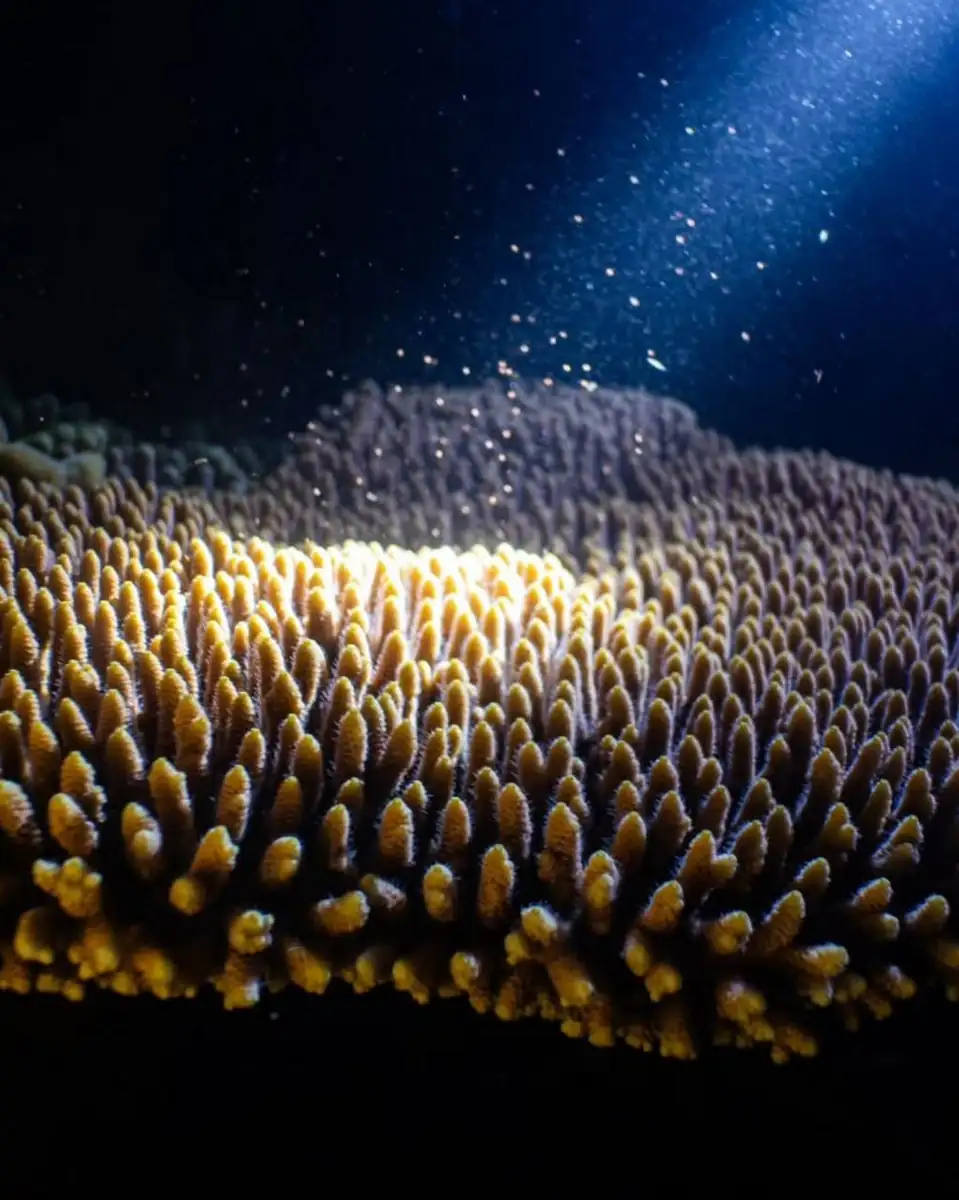
Chasing the Glow: all about timing – when to see the 2026 Great Barrier Reef Coral Spawning. To get the right time, you’ve got to be out on the Outer Reef in late November 2026, roughly three to six nights after the full moon – that’s when sea temperatures have climbed above 26°C, and the reef starts going into reproductive mode.
That’s the only window you’ve got. Miss it, and you’ll still have a fantastic dive trip. But get it right, and you could be witness to mass coral spawning – billions of coral bundles erupting up through the Coral Sea in one of the most precisely timed events on Earth.
Over the years, I’ve planned reef trips to coincide with weather fronts, full moons and water temps more times than I can count. If you want to get this right in 2026, you’ll need to get a handle on how to do it without relying on luck.
Contents
- 1 Reef’s Annual Reproductive Cycle
- 2 2026 Timing Made Simple
- 3 Picking The Right Spot For Outside Reef Access
- 4 What You’re Actually Going To See Down There
- 5 Putting The Reef In Some Context
- 6 Extend the Adventure in North Queensland
- 7 Book Smart For November 2026
- 8 Final Takeaway: Does It Really Pay Off To Plan Ahead?
- 9 FAQ
Reef’s Annual Reproductive Cycle
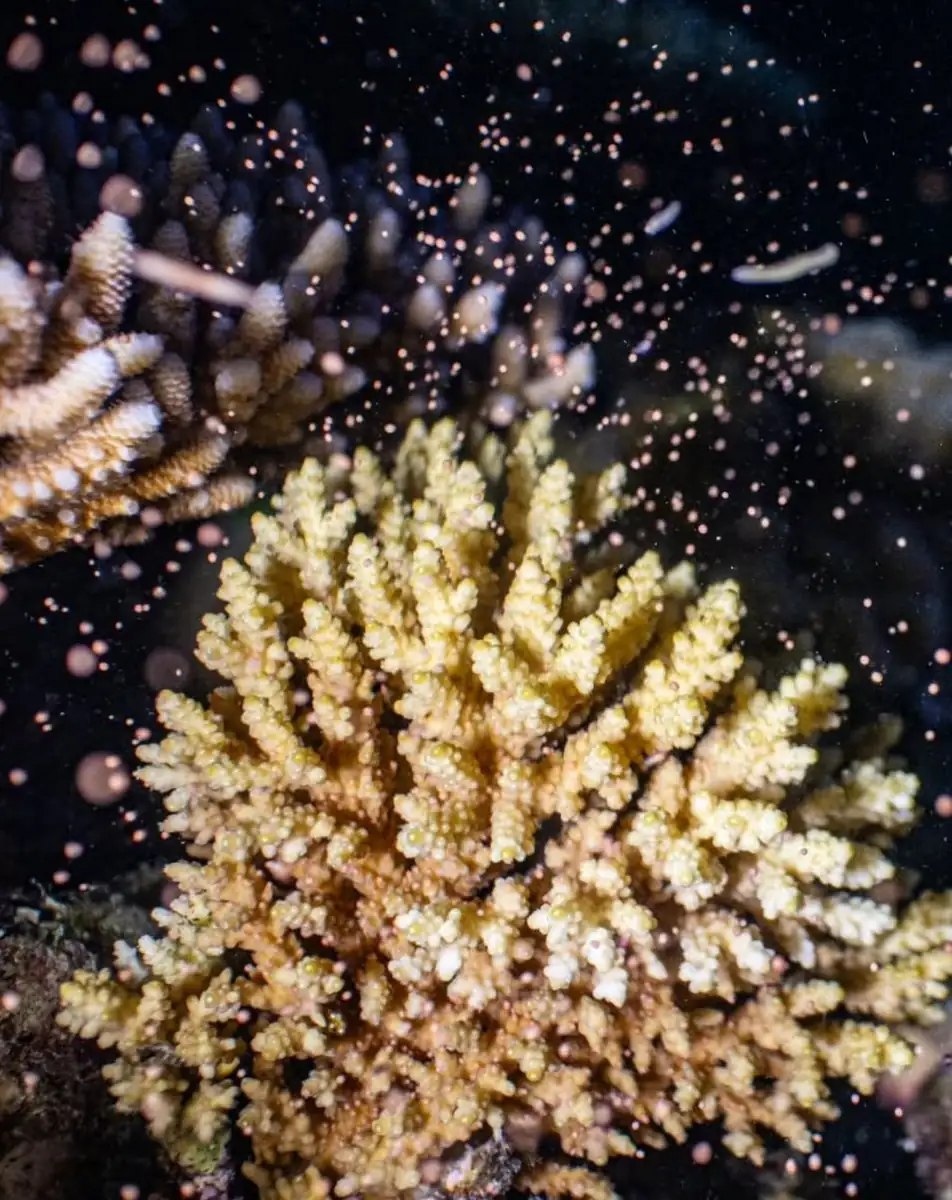
This isn’t some fancy light show. It’s basic biology with a deadline.
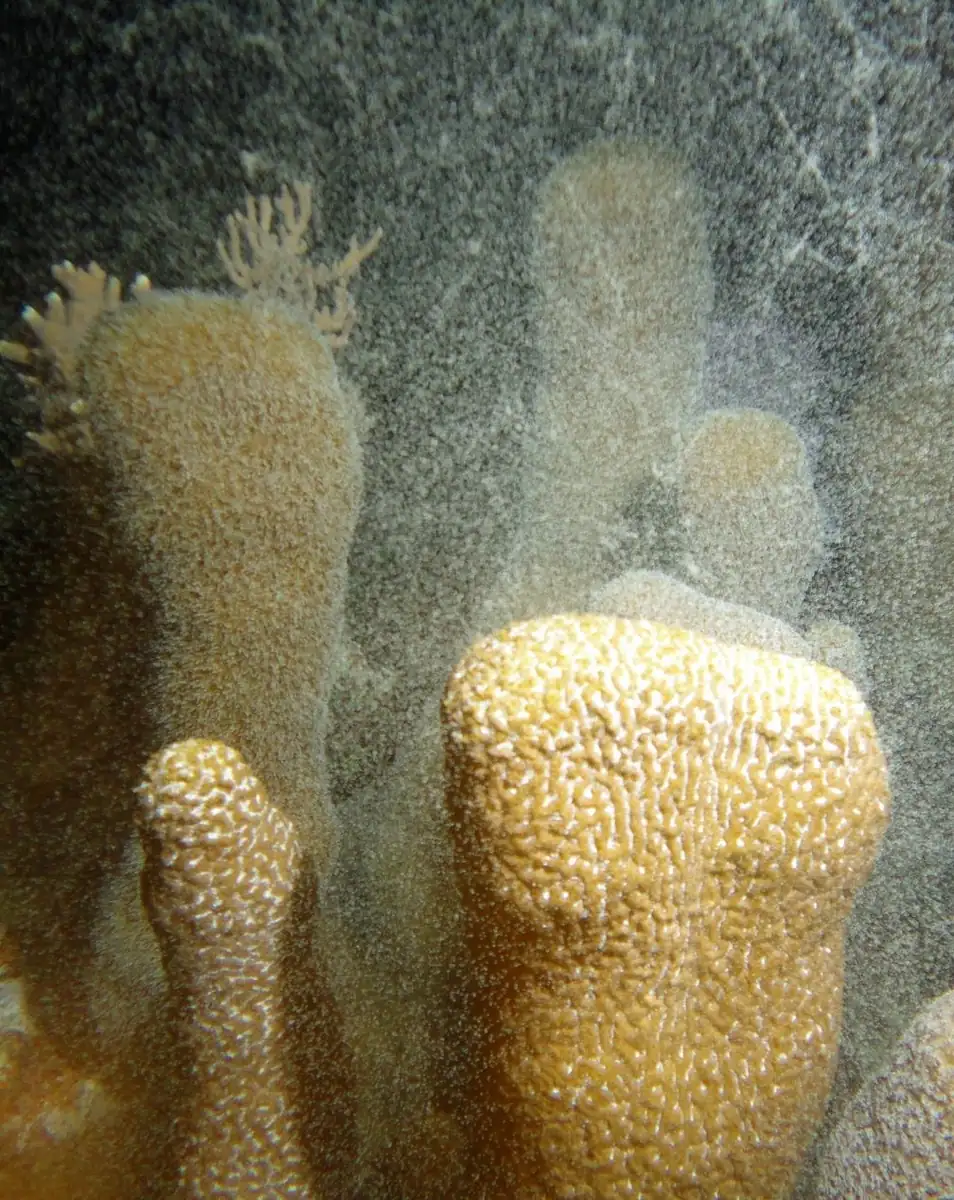
Out across the Great Barrier Reef – a 2,300-kilometre stretch along the coast of Queensland – coral polyps somehow manage to synchronise their reproduction. Each colony releases clusters of coral bundles packed with eggs and sperm. The bundles bob upwards, break apart, and fertilised coral larvae just drift off to settle and form new coral species.
The scientists call this mass coral spawning. It usually occurs in late spring, once the right combination of water temperature, daylight hours, and lunar timing has come together. Research from the Australian Institute of Marine Science confirms that a strong annual spawning event is still a key indicator of reef resilience even after coral bleaching has done its worst.
It looks like pink snow under the water – visibility drops off. The fish behave in a way that’s just plain odd. And to top it off, it smells faintly organic. You won’t be getting a glossy brochure dive – it’s real, raw ecology.
2026 Timing Made Simple
The thing is, this isn’t just going to happen “at some point in November”. The timing is spot on.
| Factor | Expected 2026 Timing | Why It Matters |
|---|---|---|
| Water Temperature | Late November | Needs sustained warmth (26–28°C) |
| Full Moon | Late November 2026 | Spawning occurs days after |
| Prime Nights | 3–6 nights post-full moon | Peak synchronisation |
| Secondary Activity | Early December | Some coral species stagger release |
Operators in Port Douglas and Cairns will often fit in a night dive around this time of year – but weather can knock this off track by a day or two, not weeks.
November is within the Stinger season up in Far North Queensland, so you can expect to be kitted out in a Stinger suit, and it’s also a time when cyclones can start to pop up, making flexibility around your plans very important.
Picking The Right Spot For Outside Reef Access
If you’re really after seeing the coral spawn in all its glory, you need to be able to reliably get to the Outside Reef – just a quick inshore snorkel isn’t going to cut it.
Port Douglas – A Quick Hop to The Ribbon Reefs
Port Douglas offers a shorter route to Agincourt and the Ribbon Reefs. It’s a well-oiled machine, but still very reef-focused. Loads of visitors book through operators like Great Barrier Reef Tours to time their snorkelling trips to coincide with predicted coral spawning.
When you’re not underwater, there’s plenty to do – explore Cape Tribulation, or take a walk through the rainforest near the Mamu Tropical Island Jet Ski Tour. It’s a good balance of snorkelling intensity and land-based R&R.
Cairns – Where Volume And Flexibility Are Key
Cairns has more boats running, more liveaboards and more departure options. If the weather is inclement, having extra operators means you’re more likely to find an alternative.
Nearby islands like Fitzroy Island, Green Island and Low Isles, etc., are great for reef breaks – but if you want to see the great spawning action, you need to head out to the deeper Outer Reef sites.
Liveaboards are your best bet – getting anchored over the reef systems during the peak spawning nights gives you so much more chance of seeing the action than relying on a day boat.
What You’re Actually Going To See Down There
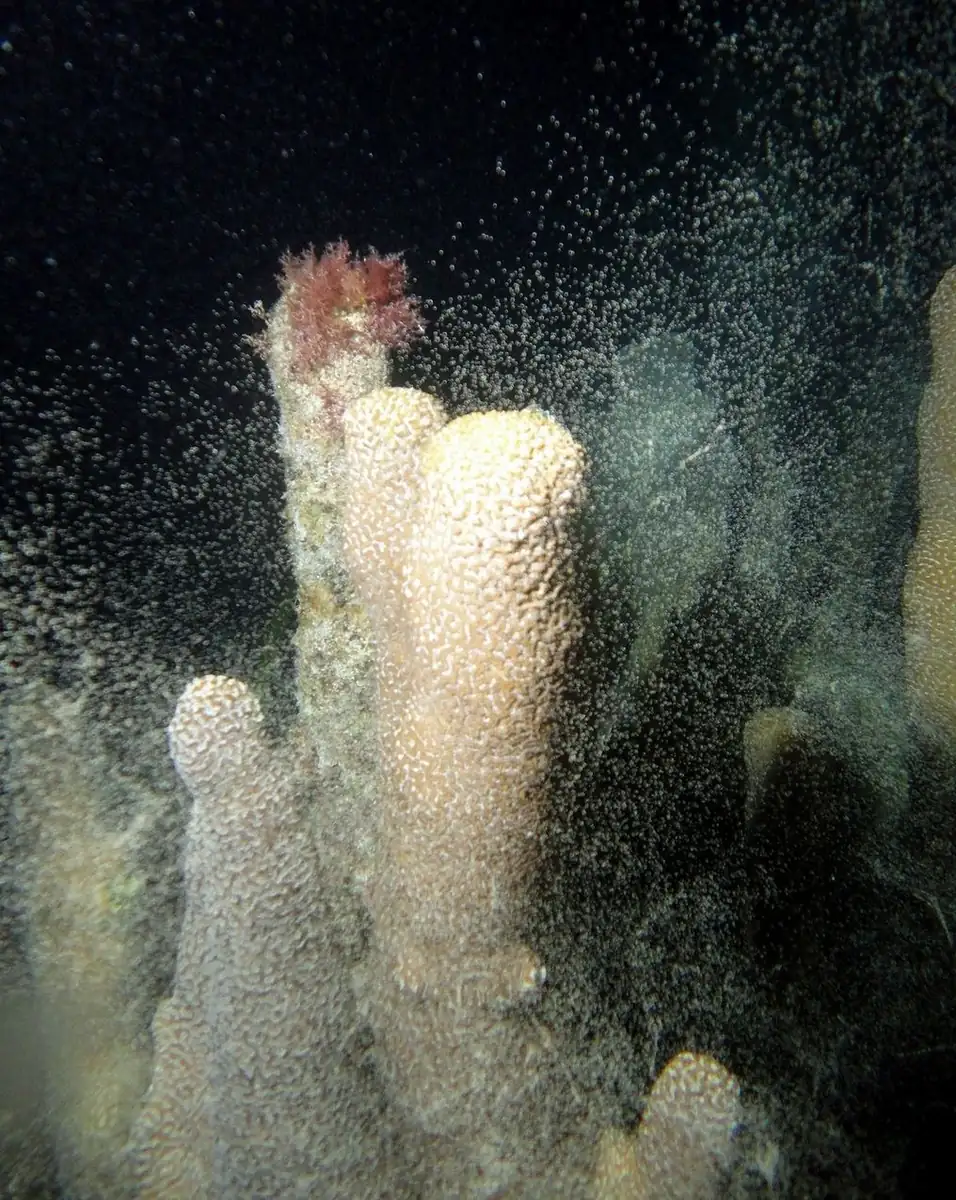
Let’s all keep our expectations in check here…
You gear up at sunset, the tropical heat wraps around you, and the pre-dive briefing is a no-nonsense affair – you need to get your buoyancy control spot on when you’re floating through coral gardens.
As darkness falls, the coral polyps go from looking pretty sad to suddenly swelling, and the first coral bundles begin releasing their spawn. Within minutes, you’ve got thousands of these spawn packets rising up through the water column. Visibility drops, and your torch beam illuminates a swarm of particles rising to the surface.
If you are prone to getting seasick, make sure you take some medication before you set off – night snorkelling in humid November conditions can be a bit of a challenge for anyone.
So, what to expect:
- Reduced visibility
- Have to be really careful not to thrash about with your fins
- Strict rule – no touching the coral
- The water smells pretty organic
- It’s an incredible sight – but not exactly glamorous.
Putting The Reef In Some Context
You can’t have a conversation about the reef without talking about Coral bleaching – the past decade has seen some pretty massive heatwaves impact parts of the reef.
BUT – the coral still spawns every year in loads of different areas, and coral larvae settlement is one of the main ways the reef is going to recover. All coral monitoring data indicate that many sections of the reef are still undergoing active reproductive cycles.
The reef is a dynamic system – it’s not static, it’s not sorted, and it’s not dead yet.
Seeing the coral divide-and-conquer in real time really puts things into perspective.
Extend the Adventure in North Queensland
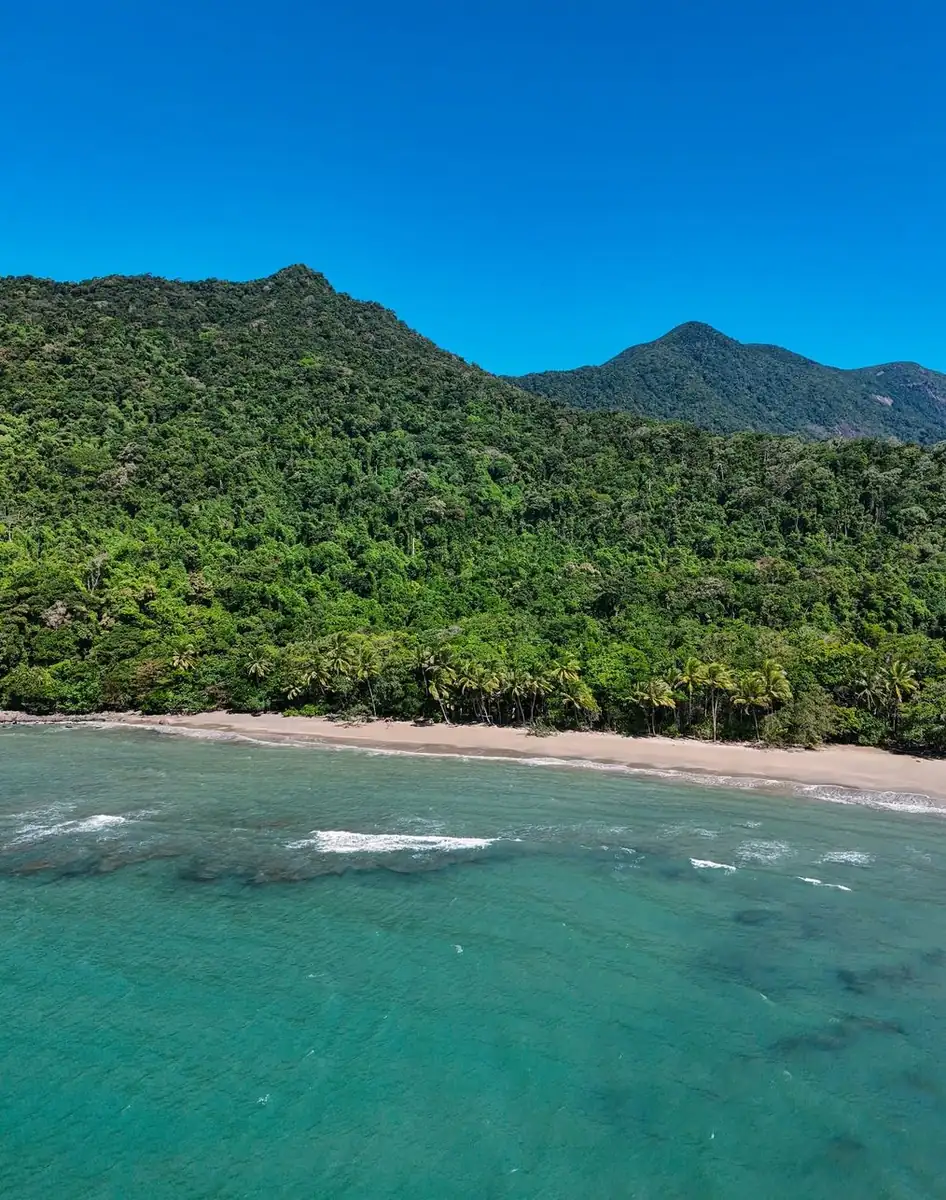
If you’re making the effort to travel out this far, why not squeeze in as much as you can while you’re there?
Gaining some perspective on the Reef’s sheer scale is pretty eye-opening. Take a scenic flight with Nautilus Aviation, and you’ll be treated to a bird ‘s-eye view of the reef’s patterns and coral cay formations.
Reef time can be paired with:
- A walk through the Cape Tribulation rainforest – the rainforest and beach combination is just incredible
- A Reef Teach education session to really get to grips with what you’re seeing
- Or why not try some local produce like Davidson plum and finger lime from the Tablelands, followed by a visit to the Wolf Lane Distillery for an afternoon’s gin tasting
If you want to head South afterwards, the Whitsundays have some of the most beautiful beaches in the country – like Whitehaven Beach and Heart Reef – and you can take a scenic route via Airlie Beach or Hamilton Island. Whales are migrating through the area about 3-4 months before I last wrote this, and Hervey Bay is a top spot for whale watching. Mid-year, the dwarf minke whales move through, not in November, though.
Different times of year – different experiences.
Book Smart For November 2026
Don’t put this till the last minute.
Treat yourself to at least 4 nights in the region so that if the weather does something dodgy, you’re not stuck in a nightmare of disappointment. Don’t count on a single dive to be the highlight of your trip either – it’s worth having a few chances to see the reef in different conditions.
School holidays in December drive prices up, so late November may be the sweet spot before the peak crowds start to descend.
Good operators like Great Barrier Reef Tours know their stuff – hang them for a minute and ask them when they’re planning to be in the right place at the right time.
Pack light – it is going to be hot and humid, so light clothes and salt tablets will be your best mates. And by hot and humid, I mean bloody hot and humid – you know what I mean, that’s just November in Far North Queensland.
Final Takeaway: Does It Really Pay Off To Plan Ahead?
If you’re after crystal clear waters and an easy snorkelling experience, you’d best be off to the Great Barrier Reef during the dry season.
If, on the other hand, you want to catch one of the world’s most epic wildlife events – Coral polyps releasing whole loads of coral bundles into one of the world’s biggest & most spectacular reproductive events – the aim is November 2026 – but plan better than that. Timing is everything. You will want to be flexible. You’ll have to accept that you will have to put up with a fair bit of humidity, reduced visibility, and possibly some nighttime dives.
But when you get to float around in that warm water, watching the coral renew itself, you get why this event is such a big deal
The reef, though, isn’t exactly going to put itself down in your diary – it goes by the moon’s cycles, not yours.
Book smart, Book quick & if you really want to time it right, then get in touch with some reputable operators – like Great Barrier Reef Tours – who know what’s going on and can track the conditions for you.
It’s all so fleeting, and it’s only for a short while – So make sure you get there on time.
FAQ
When Can I Lock In My Travel Dates For Late 2026
You should aim for a week after the full moon in November, but keep your options open and ensure you have at least a couple of extra nights free in case of bad weather.
Can Snorkellers Get In On The Coral Spawn Action?
Yes – but only sometimes – it’s more likely in the shallower reef pools – whilst divers on the outer reef have by far the best chance of seeing the whole shebang.
Does Bleaching Stop The Corals From Having Babies?
No, not at all – it’s a shame, I know – but it’s just one of those things that happens to coral reefs. They still release their larvae, which helps them regenerate in the long run
Do You Need To Do Any NightTime Diving?
Yep – most of the major spawn events tend to kick off after dark, so you’ll likely need advanced open water training for night dives
What If The Weather Turns Out To Be Pretty Grim?
November is generally a bit dodgy, weather-wise, you can get some pretty strong winds, or storms will roll in & shift the whole timetable – which is why having a bit of extra time up your sleeve is so useful.